Google Scholar is the default starting point for most researchers. It's free, it's simple, and it indexes a massive amount of academic content. But is it the best tool for serious research in 2025?
Here's an honest comparison between Google Scholar and Sentino AI.
Search Coverage
| Feature | Google Scholar | Sentino AI |
|---|---|---|
| Papers indexed | ~400M | 200M+ |
| Sources | Web crawling | arXiv, PubMed, Semantic Scholar, CrossRef |
| AI analysis | None | Answer synthesis, gap analysis |
| PDF chat | No | Yes |
| Project management | No | Yes |
| Full-text access | Links only | Direct PDF access |
| Price | Free | Free tier + Pro |
Where Google Scholar Wins
- Sheer volume — Google Scholar indexes more content, including books, patents, and court opinions
- Citation tracking — "Cited by" and "Related articles" features are well-established
- Zero friction — no signup required, everyone knows how to use it
Where Sentino AI Wins
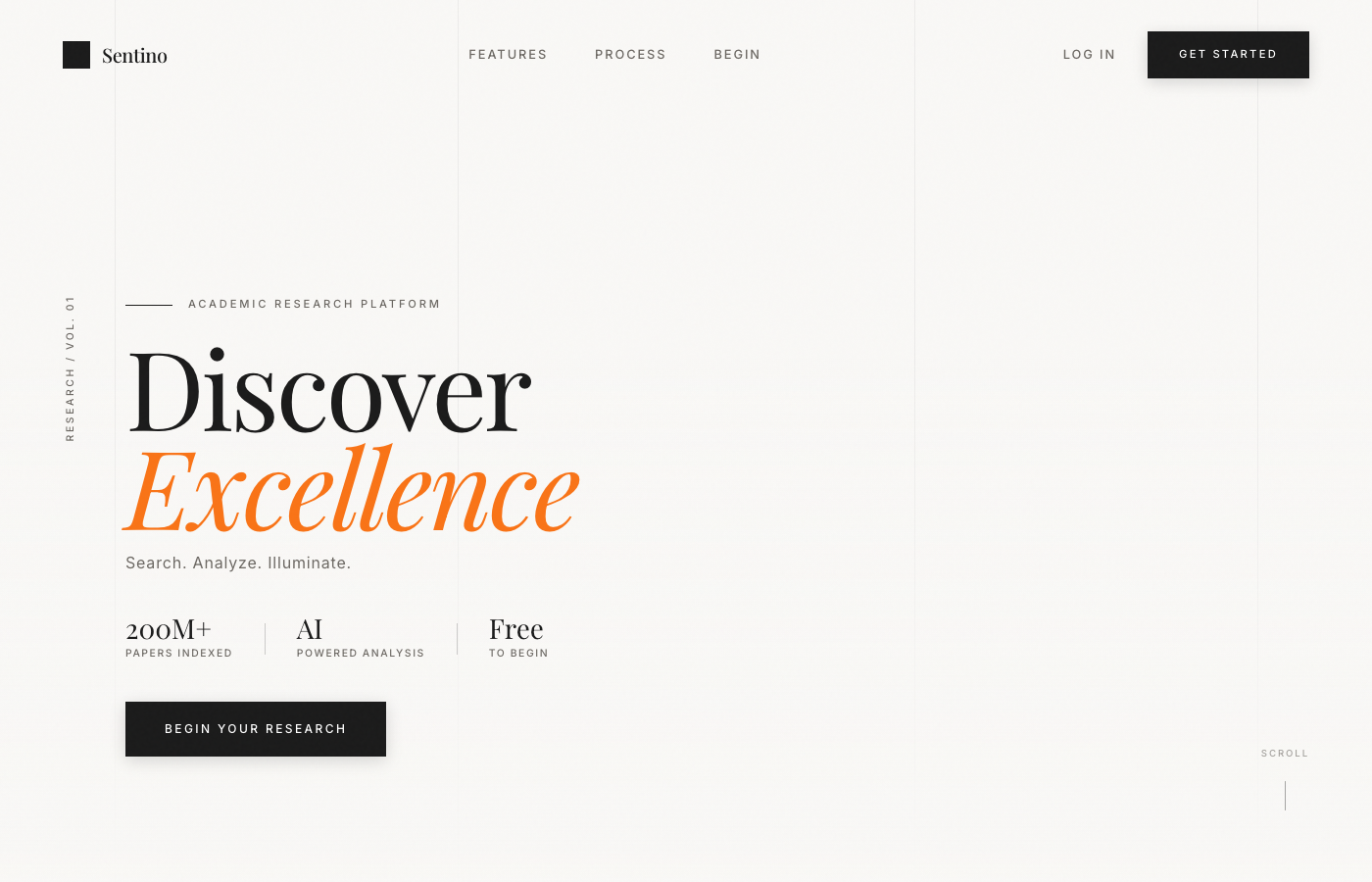
- AI-powered analysis — get synthesized answers, not just a list of links
- Multi-database search — structured search across verified academic databases
- PDF chat — upload and interrogate any paper with AI
- Research organization — save papers to projects, add notes, track progress
- Full-text access — integrated paper access including Sci-Hub
Our Recommendation
Use both. Google Scholar is great for quick, broad searches and citation tracking. Sentino AI is better when you need deep analysis, structured search across specific databases, or when you're building a literature review and need AI assistance.
Try Sentino AI free — it takes 30 seconds to sign up.